
B.Pharm (Bachelor of Pharmacy)
A professional undergraduate program focused on pharmaceutical sciences, drug development, medication safety, and healthcare services.
Program Overview
The Bachelor of Pharmacy (B.Pharm) program is a four-year undergraduate degree designed to provide students with a strong foundation in pharmaceutical sciences and healthcare.
The program focuses on the study of medicines, drug formulation, pharmaceutical chemistry, pharmacology, and clinical pharmacy. Students learn how medicines are developed, prepared, stored, and used safely for the treatment of diseases.
Pharmacy professionals play an important role in ensuring the safe distribution and proper use of medicines in hospitals and healthcare institutions.
Through academic learning, laboratory training, and practical exposure, the program prepares students for professional careers in pharmaceutical industries, hospitals, research institutions, and healthcare services. Pharmacists play a crucial role in the healthcare system by ensuring the safe and effective use of medicines.

Course Duration
The B.Pharm program has a duration of 4 years, typically divided into 8 semesters.
The course includes both theoretical learning and laboratory-based practical training to develop professional knowledge in pharmaceutical sciences.
Course Highlights
- Comprehensive education in pharmaceutical sciences
- Practical laboratory training and pharmaceutical analysis
- Understanding of drug development and medication safety
- Guidance from experienced faculty in pharmaceutical education
- Career opportunities in pharmaceutical industries and healthcare services
Eligibility Criteria
- Completion of 10+2 with Physics, Chemistry, and Biology or Mathematics from a recognized board
- Minimum marks as required by regulatory authorities or admission guidelines
- Candidates must meet the eligibility criteria applicable for pharmacy education programs
Curriculum / Subjects
The B.Pharm curriculum provides a comprehensive understanding of pharmaceutical sciences and healthcare. Major subjects include:
The curriculum also includes laboratory sessions and practical work that help students understand drug formulation, pharmaceutical analysis, and medication management.

Practical Training & Laboratory Facilities
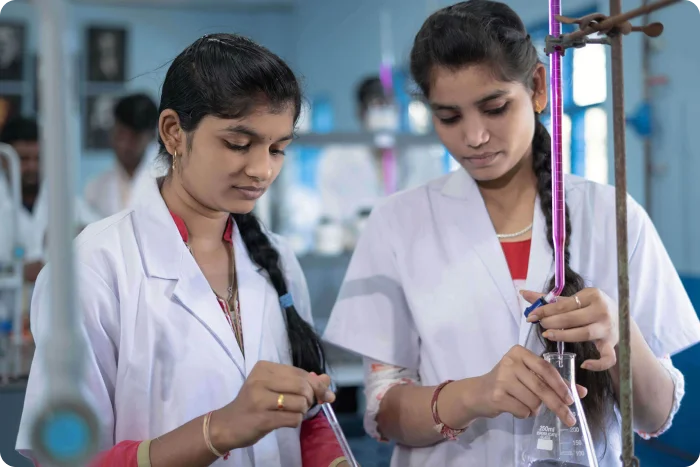
Practical learning plays a key role in pharmacy education. Students gain hands-on experience through laboratory work and practical sessions. Training may include:
These practical sessions help students develop technical skills required for pharmaceutical careers.
Career Opportunities
Graduates of the B.Pharm program have a wide range of career opportunities in the healthcare and pharmaceutical sectors, including:
- Community Pharmacist / Hospital Pharmacist
- Pharmaceutical Industry (Production, QC, QA, R&D)
- Drug Inspector (Government sector)
- Regulatory Affairs Specialist
- Pharmaceutical Marketing Professional
Graduates can work in pharmaceutical companies, hospitals, research laboratories, healthcare institutions, and regulatory organizations.
Higher Studies & Career Growth
Students completing the B.Pharm program may pursue higher education and specialization in pharmaceutical sciences:
- M.Pharm (Master of Pharmacy)
- Pharm.D (Doctor of Pharmacy)
- Ph.D in Pharmaceutical Sciences
These advanced programs allow students to specialize in research, clinical pharmacy, pharmaceutical technology, and academic careers.
Start Your Career in Pharmacy
The B.Pharm program provides the knowledge and skills required to build a successful career in pharmaceutical sciences and healthcare services. Students interested in medicines, drug research, and healthcare can pursue rewarding professional opportunities through pharmacy education.